
The word bespoke gets used loosely. A jeweller offers six base settings and lets you swap the stone colour. They call it bespoke. What they mean is semi-custom, which is useful but fundamentally different from starting with nothing and building something new.
Genuine bespoke jewellery designs require a different kind of process, a different level of skill, and a different kind of conversation. Understanding what that actually looks like helps you figure out whether you need it and who can deliver it.
The Brief Comes Before the Design
In bespoke work, nothing is designed until the brief is understood. The brief isn’t a Pinterest board or a catalogue page with a circle around it. It’s the answer to a series of questions that reveal what the piece actually needs to be.
Who’s wearing it and how do they live? What other pieces do they own and love? What style language resonates with them, even if they don’t have the vocabulary to describe it precisely? Does the piece need to work alongside something existing? Is there a story behind the commission that the design should reflect?
These answers eliminate options and generate possibilities. A brief that says “she works in a kitchen, wears minimal jewellery, loves clean lines, and has a slim finger” produces a completely different design space than “she’s a creative, wears stacked rings, loves texture and warmth.” Both are useful briefs. Neither is a catalogue choice.
The Difference Between Fabrication and Casting
Most mass-produced jewellery is made by creating a model and casting multiple pieces from it. The process is efficient and consistent. It’s also limited to what can be produced by the mould.
Hand fabrication starts with metal in its raw form. The jeweller shapes it, forms it, constructs settings by hand. This allows for techniques that casting doesn’t easily replicate. Certain stone settings, surface textures, structural approaches, and proportional decisions all work differently when built from scratch by hand.
Seeing the Design Before It Exists
A CAD render and 3D model, or a detailed hand sketch for simpler pieces, should always precede fabrication. This isn’t optional. It’s a basic protection for both the client and the jeweller.
At the render stage, proportions can be adjusted. Design elements can be changed. The client can see how the piece will look before any metal is cut or stone set. Changes here cost time but not much else.
After fabrication begins, changes are expensive. After casting and setting are complete, changes are sometimes structurally impossible. The render stage exists precisely to avoid this.
Stone Selection as a Design Decision
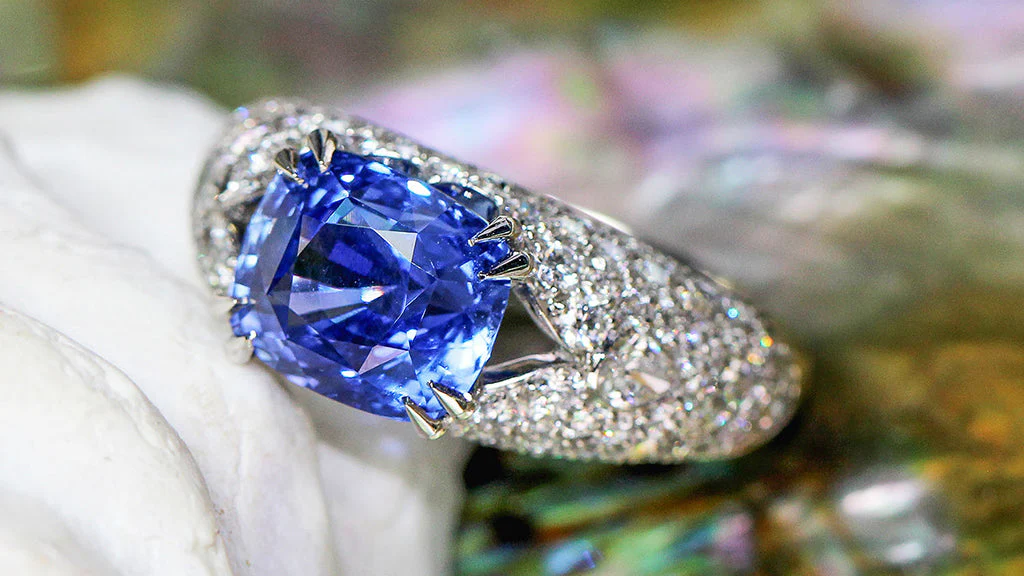
In bespoke work, the stone and the design are developed together. Stone shape affects setting design. Setting height affects how the stone appears. Stone quality characteristics matter differently depending on the setting style.
Choosing the stone before the design is settled sometimes means choosing the wrong stone for what the design ends up being. In a proper bespoke process, both develop together with the stone selected at the point when the design is clear enough to know what’s needed.
When Inherited Materials Are the Starting Point
Some bespoke commissions begin with existing materials. Old stones being reset. Gold from multiple pieces being combined into something new. A piece that’s damaged beyond repair being remade using whatever can be salvaged.
This requires honest assessment of what’s there. Old-cut diamonds have different proportions from modern cuts and suit certain settings better than others. Gold from different eras varies in alloy composition. A jeweller taking on this kind of work needs to understand the material before the design conversation begins.